
Environmental sustainability
KCHA is committed to reducing its environmental impact and promoting sustainable practices across its housing portfolio.
KCHA is committed to reducing its environmental impact and promoting sustainable practices across its housing portfolio.
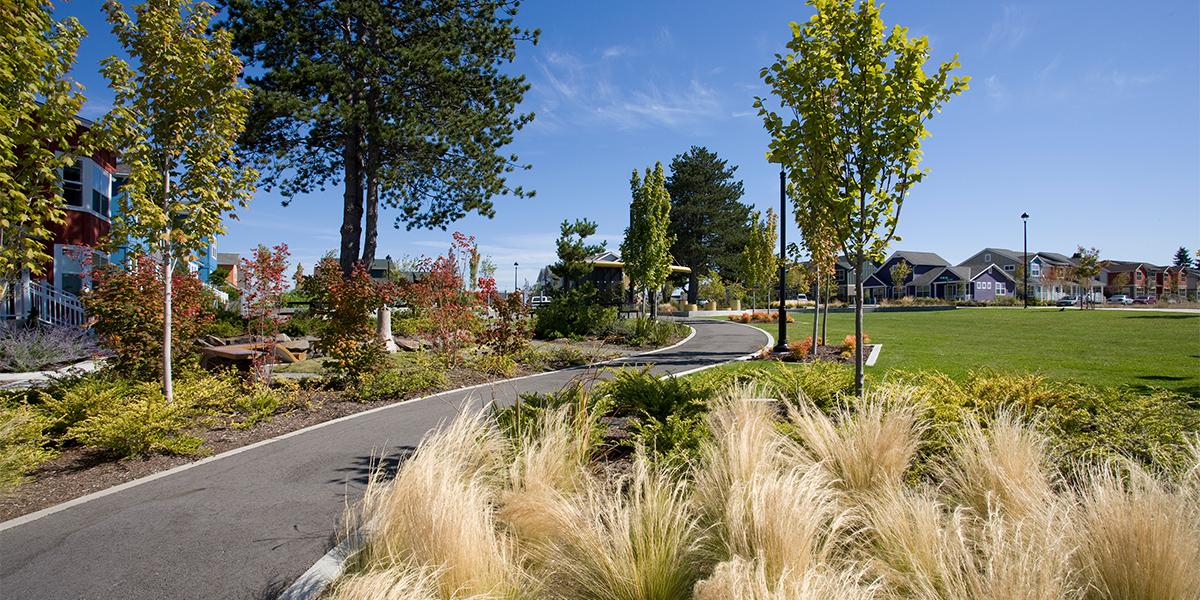
The Pacific Northwest is known for its natural beauty and practical environmentalism. As a member of this community, KCHA works to limit any negative impacts on the environment. In development projects and building upgrades, we use energy-efficient construction and resource-saving features that reduce costs and protect community health over the long-term.
KCHA’s resource conservation reduces operating costs and impacts to the environment—saving money for KCHA and for our residents, and improving the quality of life in our communities.
We work with our communities to save water and energy, reduce solid and hazardous waste, and use products made with recycled materials and fewer hazardous chemicals.
Examples of KCHA’s sustainability, environmental, and resource conservation strategies include:
KCHA’s focus on resource conservation reduces operating costs and impacts to the environment, and improves the quality of life for residents. We work with residents and staff to save water and energy, reduce solid and hazardous waste, and purchase products made with recycled materials and fewer hazardous chemicals.
KCHA’s 2022-2026 Sustainability Action Plan details the strategies used to reach annual resource conservation goals. The following annual reports outline KCHA’s success in meeting the goals of these plans:
KCHA recognizes climate change as a global problem that demands action at a local level. That is why the agency is committed to leading the nation’s public housing sector in reducing its dependency on fossil fuels and carbon-intensive products. In 2018, KCHA conducted a comprehensive greenhouse gas inventory report — one of the first of its kind for a public housing agency — to quantify its carbon footprint and identify strategies to reduce its direct and indirect greenhouse gas emissions. Our greenhouse gas inventory report update, published in 2019, outlines how KCHA’s carbon footprint has changed.
KCHA installs WaterSense-rated fixtures in all of its buildings. Residents enjoy lower energy bills as a result, while KCHA reduces overall property management costs. Our standards for plumbing fixtures exceed code requirements and have helped reduce water use by more than 40 percent over standard low-flow fixtures, leading to nearly $1 million in savings. Energy conservation projects save KCHA and residents more than $650,000 per year.
In 2001 and 2016, KCHA entered into Energy Performance Contracts (EPCs) to fund the installation of energy-efficient lighting, heating, and ventilation, as well as water plumbing fixtures. More than 30 subsidized housing communities in 14 cities benefited from these upgrades.
An EPC is a financing technique that uses future utility cost savings from the installation of water- and energy-efficient technologies to repay for the cost of their installation. This method helps KCHA promote utility efficiency, cost savings, and environmental sustainability.
We are working with the Washington State Department of Enterprise Services and Johnson Controls to implement this project. Other partners include the U.S. Department of Housing and Urban Development, the Washington State Housing Finance Commission, King County’s Green Community Initiative, Puget Sound Energy, and Seattle City Light.
KCHA started a recycling education program for residents in 2010. Since then, staff have worked one-on-one with thousands of households to teach good recycling habits. Residents responded by recycling more waste and sorting it with greater care, reducing property garbage volumes by as much as 50 percent.
All KCHA properties and offices now offer recycling. Three housing communities also have a food waste composting service. In addition, maintenance staff at 15 properties have on-site yard waste collection. This reduces staff time spent hauling yard debris to transfer stations, and turns materials otherwise bound for the landfill into compost.
KCHA’s employee-led Green Team helps raise staff awareness of good environmental practices. The committee sponsors activities such as Earth Day clean-ups, efficient driving campaigns, and waste reduction initiatives. These efforts benefit staff both on the job and at home.