
School success
Regular school attendance helps children develop their academic and social-emotional skills. KCHA provides resources and programs to support students from kindergarten to college.
Regular school attendance helps children develop their academic and social-emotional skills. KCHA provides resources and programs to support students from kindergarten to college.
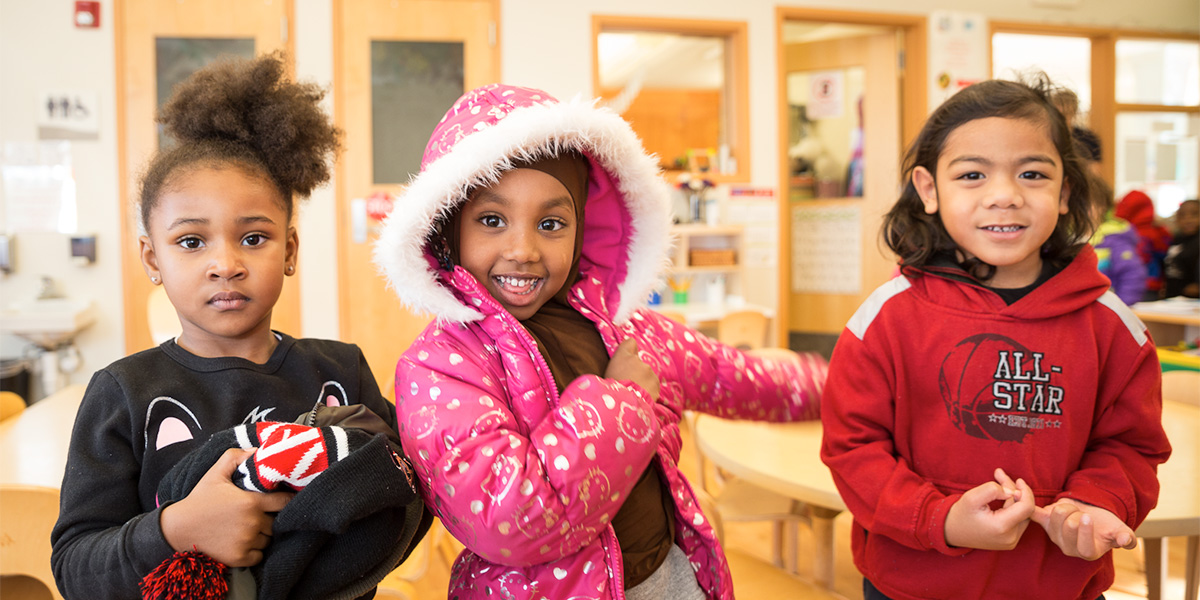
KCHA works with parents, students, and community partners across 17 school districts to support students from kindergarten through high school with academic and social-emotional learning so that they have a bright future.
For college students experiencing homelessness, KCHA has a partnership with Highline College to provide temporary rental assistance through the While In School Housing (WISH) program.
Download the WISH program flyer
Children start learning the day they are born, and develop early language, math, and social skills in the youngest years. Young children (ages 0-5) in early learning programs like playgroups, ECEAP, and Head Start do better in school, academically, socially, and emotionally.
Help Me Grow Washington has comprehensive resources for parents and early learners including information on pregnancy and birth, healthcare, child development, and basic needs.
Call BrightSpark (formerly Childcare Resources) at (206) 329-5544 to learn more about Play & Learn groups and other programs for children younger than age 5. Use the links above for ECEAP and HeadStart.
KCHA has Early Learning Connectors who work with parents to help support the learning and development of young children at eight properties, including Birch Creek, Valli Kee, Cascade, Spiritwood Manor, Hidden Village, Eastside Terrace, College Place and Ballinger Homes. This work is supported by a partnership with KidVantage.
Learning does not end when the school day is over. You can enroll your child in after-school and summer programs that allow them to participate in a wide range of enriching activities so they can explore their interests, build skills, and make friends. These activities help children learn and have fun, and are available from kindergarten through high school.
KCHA partners with community organizations to offer out-of-school time programs on-site at 14 properties in Auburn, Bellevue, Burien, Des Moines, Kent, Shoreline, and White Center. These programs are managed by nonprofit providers, including the Bellevue Boys & Girls Club, the Boys & Girls Club of King County Southwest Branch, the Center for Human Services, Kent Youth and Family Services, Neighborhood House, Southwest Youth and Family Services, and the YMCA of Greater Seattle.
Contact your local school to learn more about after-school programs in your area.
The Student and Family Stability Initiative (SFSI) is a partnership with the Highline and Tukwila School Districts and the nonprofit Neighborhood House to provide short-term rental assistance and eviction prevention along with case management, financial counseling and employment navigation. SFSI helps families get back on their feet so that students can focus on learning in the classroom. Students must be enrolled in the Highline or Tukwila school districts.
Download the SFSI program flyer [UPDATE W/NEW PDF]
You can help your child do well in school by keeping them at the same school until summer, when they are between grades. Research shows that children who change schools during the school year tend not to perform as well as those who do not, because they:
To learn more about an area’s schools, visit GreatSchools. The site lets you compare schools based on test scores, class sizes, parent reviews, and more.